
5.0 Reviews
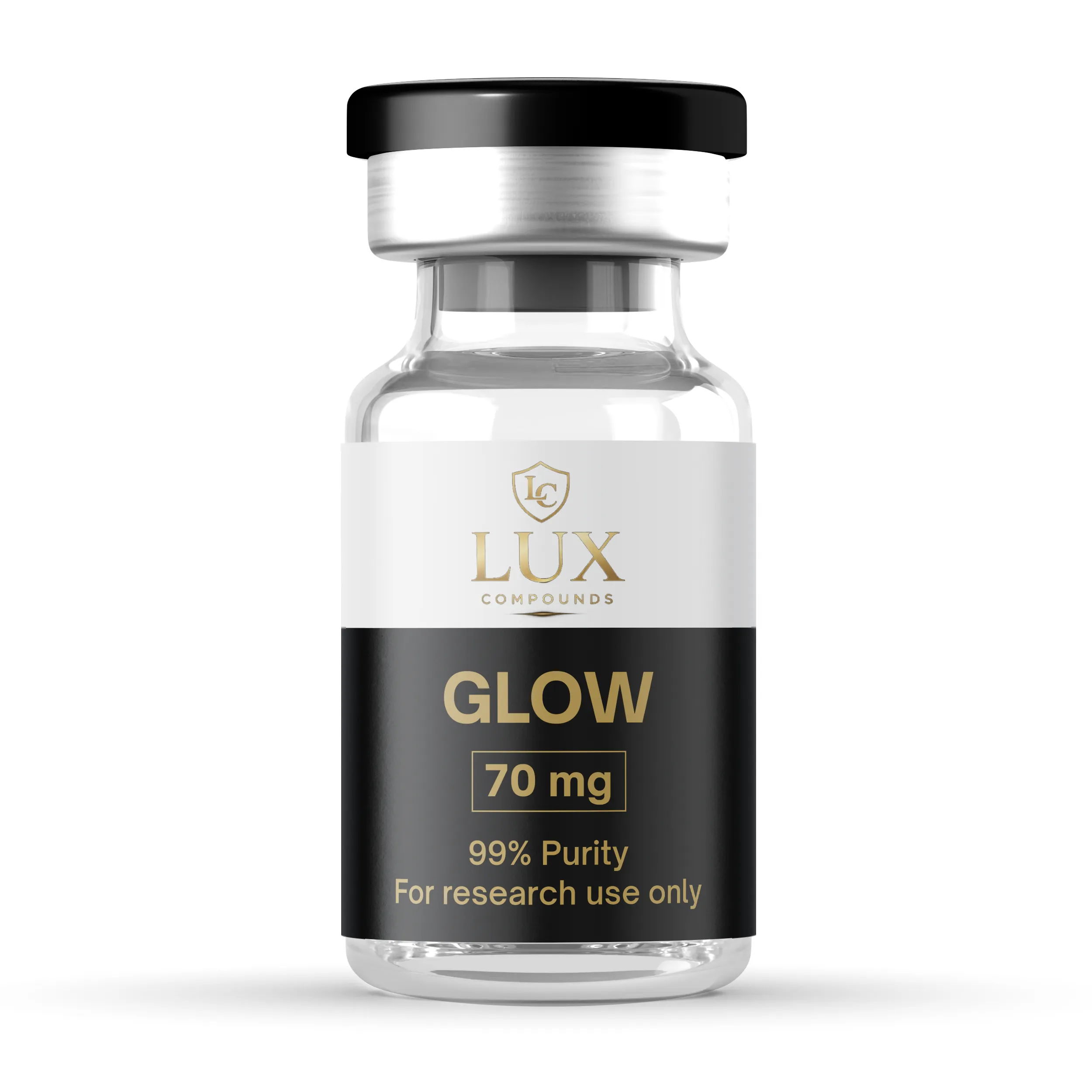
BPC-157 / TB-500 / GHK-Cu (GLOW)GLOW BlendThree-Peptide Research TriadResearch Peptide Blend
A blend of three peptides—BPC-157, TB-500, and GHK-Cu—studied in preclinical and in-vitro models for their interaction with angiogenesis, cellular-migration, and extracellular-matrix pathways. For laboratory research use only.
All products currently listed on this site are for research purposes only.
$99.99 Original price was: $99.99.$89.99Current price is: $89.99.
We accept :

Third Party Tested by Freedom Diagnostics
The Science, Simplified
Key insight: In cell-culture models, TB-500 has been studied for its role in G-actin sequestration and cell-migration assays, where its presence is associated with altered migration rates relative to control groups.
Key insight: In research models, this triad is studied for its association with more organized collagen-fiber arrangement in extracellular-matrix assays, relative to disordered fiber compaction.
Key insight: In gene-expression studies, GHK-Cu has been observed to modulate a large number of genes associated with inflammatory and antioxidant signaling pathways.
What research literature describes
These compounds are handled as stable research materials; standard laboratory protocols apply given the combined potency of the constituents.
🧿 Handling & Storage Notes
Store lyophilized at -20°C
mild
Reconstitute with bacteriostatic water
mild
Protect from light exposure
mild
Safety Advantage
Physiological Synergy
Technical specifications for each component
🔬 Molecular Profile
What Is In GLOW?
BPC-157
15 amino acids, 1,419 Da
TB-500
43 amino acids, 4,963 Da
GHK-Cu
3 amino acids + Cu²⁺, 403 Da
Total peptides
3 distinct compounds
Mechanisms
Complementary pathways
🧊 Storage Requirements
Stability Information
BPC-157 and TB-500 are currently in preclinical research stages, while GHK-Cu is studied in cosmetic-science research and ongoing research studies.
Lyophilized (powder)
-20°C long-term
Reconstituted
2-8°C
use within 7 days
Light protection
Store away from light
📋 Research Status
Where Each Stands
BPC-157 and TB-500 are currently in preclinical research stages, while GHK-Cu is studied in cosmetic-science research and ongoing research studies.
BPC-157 studies
200+ publications
TB-500 studies
170+ publications
GHK-Cu studies
130+ publications
Combination studies
Emerging research
Common questions about GLOW
Peer-reviewed research
Growth Hormone & IGF Research
BPC-157 Upregulates Growth Hormone Receptor Expression
2018
Journal of Investigative Dermatology
Thymosin Beta-4 Accelerates Wound Healing
1999
Malinda KM et al.
For laboratory research use only; not for human or animal use. This product is sold exclusively for research and educational purposes. It is not intended to diagnose, treat, cure, or prevent any disease.
All research data and findings presented on this page are sourced from peer-reviewed journals and official publications. They are provided for educational reference only and should not be interpreted as medical advice or product claims.
By purchasing this product, you confirm that you are a qualified researcher and will use it in accordance with all applicable laws and regulations.