
5.0 Reviews
EGRIFTATH9507
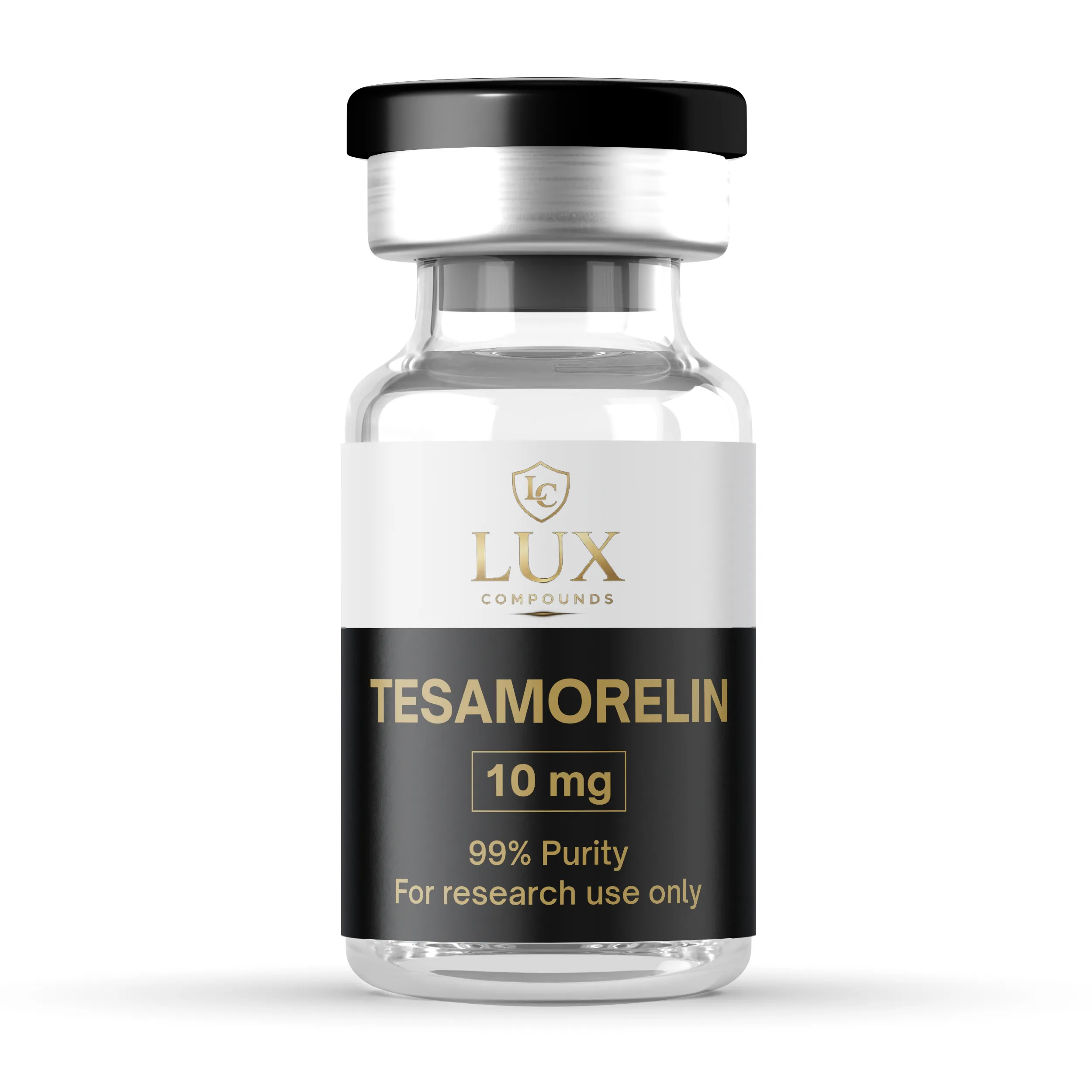
A 44-amino acid synthetic analog of growth hormone-releasing hormone (GHRH) studied for its modulation of pituitary GH secretion pathways in laboratory research models. For laboratory research use only.
All products currently listed on this site are for research purposes only.
$90.00 – $159.99Price range: $90.00 through $159.99
We accept :

Third Party Tested by Freedom Diagnostics
The Science, Simplified
Key insight: Research characterizes Tesamorelin primarily by its interaction with the GHRH receptor and the resulting GH/IGF-1 secretion pathway observed in research models.
Key insight: Tesamorelin is used as a reference GHRH analog for studying GH/IGF-1 pathway signaling in controlled laboratory research.
Key insight: GHRH analogs such as Tesamorelin are studied as reference compounds for GH/IGF-1 pathway signaling in laboratory research models.
What research literature describes
Handled as a research chemical under standard laboratory protocols.
🧿 Storage & Handling
Store lyophilized at -20°C
note
Reconstitute with bacteriostatic water for laboratory use
note
Protect from light
note
Research Note
Biochemical Markers
Technical specifications for each component
🔬 Molecular Profile
What Is In Tesamorlin
Tesamorelin
44 amino acids, ~5,135 Da
Sequence
Modified human GHRH analog
Modifications
trans-3-hexenoic acid attachment
CAS Number
218949-48-5 (Free Base)
Formulation
Lyophilized Peptide Powder
🧊 Storage Requirements
Stability Information
Lyophilized (powder)
Store at -20°C
for long-term stability.
Reconstituted
Store at 2-8°C
use within 14 days.
Light protection
Protect from direct light at all times.
📋 Research Status
Where Each Stands
FDA Approved
Under the brand Egrifta (Lipodystrophy)
TB-500 studies
170+ publications
GHK-Cu studies
130+ publications
KPV studies
100+ publications
Combination studies
Emerging research
Common questions about Tesamorelin
Peer-reviewed research
Not for human consumption. This product is sold exclusively for research and educational purposes. It is not intended to diagnose, treat, cure, or prevent any disease.
All research data and findings presented on this page are sourced from peer-reviewed journals and official publications. They are provided for educational reference only and should not be interpreted as medical advice or product claims.
By purchasing this product, you confirm that you are a qualified researcher and will use it in accordance with all applicable laws and regulations.